Last updated October 16, 2026








Free written scope consultation - allowances, timeline, and change-order rules on paper before a single trade is scheduled
General Contractor Maintenance Checklist for Pasadena Homeowners
Pasadena sits in a wind corridor between the San Gabriel Mountains and the LA Basin, and the Santa Ana conditions that roll through every fall do more hidden damage to rooflines, caulking, and exterior wood than most homeowners catch before it becomes a four-figure repair. Most maintenance checklists circulating online were written for generic American homes in mild climates, and they completely miss what actually fails in Pasadena. This guide is different. It is built around the three forces that break homes in the 91103, 91105, and 91107 zip codes: hot dry summers, winter moisture, and expansive clay soil that moves under your foundation. You’ll learn what to check, how often to check it, and when to stop self-assessing and call a licensed contractor.
Quick Answer
A Pasadena home maintenance checklist should be built around four seasonal inspections per year, with specific attention to exterior wood and caulking before Santa Ana season, foundation and drainage after winter rains, HVAC systems in late spring, and tile roof inspections every two to three years. Homeowners can safely self-assess most visible surfaces, but an annual walkthrough with a licensed general contractor catches the hidden failure points that lead to four-figure repairs. In Pasadena’s climate, skipping these checks costs homeowners an average of 3 to 5 times more than catching the problem early.
Styles & brands we work with






Table of Contents
- Exterior Wood and Paint: The Pasadena Failure Cycle
- Foundation and Drainage Checks for Expansive Clay Soil
- HVAC Maintenance Intervals for Pasadena’s Run-Hard, Sit-Idle Climate
- Tile Roof Inspections: What Asphalt-Shingle Checklists Miss
- Caulking, Sealants, and the Santa Ana Wind Effect
- Plumbing Checks for Aging Pasadena Housing Stock
- What to Self-Assess vs. When to Bring in a Licensed Contractor
- A Seasonal Maintenance Schedule That Actually Works
Exterior Wood and Paint: The Pasadena Failure Cycle
Pasadena’s summers are brutal on exterior wood. We’re talking 90-plus degree days from June through September, with single-digit humidity and UV exposure that breaks down paint binders faster than coastal climates. Then winter arrives with moisture, and that moisture finds every micro-crack the summer created. The result is a predictable cycle: paint fails at the south and west exposures first, water gets behind the paint film, and wood rot begins where you can’t see it.
In neighborhoods like Bungalow Heaven and the Craftsman districts north of the 210, we regularly see window sills, fascia boards, and porch columns with rot that started three years before anyone noticed. The paint looked fine from the street. The failure was happening underneath.
Here’s what to check and how often:
- Every spring (March-April): Walk the entire exterior and look for hairline cracks in paint at joints, corners, and nail heads. Use a screwdriver to gently probe any soft spots you find. Soft wood means rot is already active.
- Every fall (September-October): Check for lifting paint at the bottom edges of siding and trim. Loose paint is an entry point for winter moisture.
- South and west exposures: These get the most sun and fail first. Check them twice as often as north-facing walls.
- Wood-to-concrete contact points: Porch posts, stair stringers, and fence posts that touch concrete or soil wick moisture constantly. These are the most common rot points we repair in Pasadena.
The inspection frequency that actually prevents rot is every six months, not annually. A spring check catches winter damage. A fall check prepares you for the rain. Skipping one season is how a $400 caulking and paint touch-up becomes a $3,800 wood replacement job.
Foundation and Drainage Checks for Expansive Clay Soil
The soil under Pasadena is not inert. It moves. Much of the flatland area and the foothill slopes sit on expansive clay that swells when wet and shrinks when dry. This is the single biggest cause of foundation cracking and sticking doors in the region, and it is almost never mentioned on generic maintenance checklists.
During a dry stretch, clay soil contracts and pulls away from your foundation. Then heavy rain arrives, the soil expands rapidly, and the resulting pressure against your foundation walls creates the hairline cracks you see in drywall and exterior stucco. The fix is not just patching the crack. The fix is managing the water.
- Check your downspouts every October: They should extend at least 4 to 6 feet from the foundation. In Pasadena, we recommend splash blocks or flexible extensions on every downspout. Water dumping directly at the base of your foundation is like watering the clay soil on purpose.
- Walk the perimeter after the first heavy rain: Look for standing water anywhere within 3 feet of the house. Puddles that remain after 24 hours need grading work.
- Inspect crawl space vents and foundation vents: Make sure they are open and clear so moisture can escape. Clogged vents trap humidity against floor joists.
- Check for hairline cracks in stucco and interior drywall every spring: Document them with photos on your phone. If a crack grows wider than 1/8 inch over a year, call a structural engineer or a general contractor who can assess whether it is cosmetic or structural.
- Inspect concrete walkways and driveways for new heaving or separation each fall: Soil movement often shows up in flatwork before it shows up in the house.
We have seen Pasadena homeowners spend $15,000 on foundation repairs that could have been prevented with a $300 downspout extension and a weekend of regrading. The clay soil is not going to change. How you manage water around your foundation is the variable you control.
HVAC Maintenance Intervals for Pasadena’s Run-Hard, Sit-Idle Climate
Pasadena’s HVAC systems have a harder life than systems in more temperate climates, and the problem is the idle periods as much as the run periods. Your air conditioner works hard from May through October, then sits essentially unused for five months. During that idle stretch, dust accumulates on coils, pests move into condenser units, and seals dry out. When you fire the system up again in May, it is running at reduced efficiency on components that have been degrading quietly all winter.
The maintenance interval that actually works for Pasadena homes is twice per year:
- April (pre-season): Replace air filters, clean the condenser coil, check refrigerant levels, and verify the thermostat is calibrated. This is also the time to check that the condensate drain line is clear. Clogged drain lines are the most common cause of AC water damage in Pasadena homes, and they are easy to fix before the first heat wave.
- October (post-season): Clean the system, replace filters again, and inspect for pest intrusion. Rodents love condenser units in the winter. Look for chewed wiring, nesting material, and droppings. This is also the moment to cover the condenser or at least clear vegetation away from it.
One specific Pasadena issue: the dry air means dust accumulates faster here than in humid climates. We recommend checking air filters every 60 days during peak AC season, not the 90-day interval that national guides suggest. A clogged filter forces the system to work harder, which raises your electric bill and shortens the life of your compressor.
Tile Roof Inspections: What Asphalt-Shingle Checklists Miss
Walk through neighborhoods like Madison Heights, South Arroyo, or the hills above the Rose Bowl, and you will see tile roofs on a majority of the homes. Spanish-style architecture dominates Pasadena, and with it comes barrel tile, flat tile, and concrete tile roofing. Most roof maintenance checklists are written for asphalt shingle roofs, and they miss the specific failure modes of tile.
Tile roofs do not fail the way shingles do. Tiles do not curl or lose granules. Instead, the failures are in the underlayment beneath the tiles, and the tiles themselves crack, shift, or break under foot traffic, falling branches, and the repeated expansion and contraction of Pasadena’s hot days and cool nights.
Here is what to look for:
- Cracked or broken tiles: These are visible from the ground with binoculars or from a ladder at the roof edge. A cracked tile lets water reach the underlayment. One cracked tile can eventually rot the wood beneath it.
- Shifted tiles: After a Santa Ana wind event, walk the perimeter and look for tiles that are no longer in alignment. The wind loosens the fasteners, and the next storm blows them off entirely.
- Cracked or deteriorated ridge caps: The ridge is the highest point of the roof and takes the most UV exposure. Ridge cap failure is the most common entry point we find during Pasadena roof inspections.
- Flashing around chimneys, skylights, and vents: Flashing is metal, and it expands and contracts at a different rate than the tile around it. The sealant at flashing joints breaks down in Pasadena’s UV intensity faster than in coastal areas.
- Moss or organic growth: Less common in Pasadena’s dry climate than in the Pacific Northwest, but shaded roof sections on the north side of a home or under overhanging trees can hold moisture and grow moss. Moss lifts tiles and holds water against the underlayment.
Tile roof inspections should happen every two to three years, or after any major wind event. Do not walk on a tile roof yourself. Tile cracks easily under weight, and a fall from a tile roof is a life-changing injury. Hire a licensed roofer or a general contractor with roof inspection experience to do the walk, or use a drone for a visual check of the upper sections. See our guide on How to Hire a Construction Contractor in Pasadena: A Step-by-Step Guide for tips on vetting the right pro.
Caulking, Sealants, and the Santa Ana Wind Effect
The Santa Ana winds that hit Pasadena every fall are not just a fire hazard. They are a maintenance hazard. Sustained winds of 40 to 60 miles per hour, with gusts higher, push against your home’s envelope and find every weak point in your exterior sealants. Combined with the dry air, the wind pulls moisture out of caulking and sealants, causing them to crack and shrink. Then the winter rains arrive and find those same cracks.
The areas that fail first in Pasadena:
- Window and door perimeter caulking: Check every window and door frame in October, before the first rain. Run a finger along the caulk line. If it feels brittle, cracks when you press it, or has pulled away from the surface, it needs replacement.
- Exterior penetrations: Hose bibs, electrical conduit, cable lines, dryer vents. Every hole through your exterior wall is a potential water entry point. The sealant around these penetrations breaks down in Pasadena’s UV in about three to five years.
- Stucco control joints: Pasadena has a huge stock of stucco homes, and stucco moves. Control joints are the intentional gaps that let stucco expand and contract without cracking. The sealant in those joints dries out and fails. Check them twice a year.
- Flashing joints at rooflines: The metal flashing where your roof meets exterior walls is sealed with caulk that gets baked by the Pasadena sun. This is a common leak point in older homes.
A tube of quality exterior sealant costs $8 to $15 at any hardware store. A water damage repair from a failed sealant starts at around $800 and goes up fast once drywall, insulation, and framing are involved. The math on this one is easy.
Plumbing Checks for Aging Pasadena Housing Stock
Much of Pasadena’s housing stock was built between 1910 and 1960, and a significant portion of those homes still have original galvanized steel supply lines or cast iron drain lines. These materials have a finite lifespan, and they fail in predictable ways. Galvanized pipes corrode from the inside, slowly reducing water pressure and eventually leaking. Cast iron drain lines rust through at the bottom, causing slow leaks that rot subfloors and framing before anyone notices.
If your Pasadena home was built before 1970 and you have not replaced your supply lines, add these checks to your maintenance routine:
- Check water pressure every six months: Buy a $10 pressure gauge that screws onto a hose bib. Healthy pressure is 40 to 60 PSI. If you are seeing 30 or below, your galvanized lines are closing up. This is not a repairable condition. The lines need replacement.
- Look for rust-colored water after a vacation: When water sits in galvanized pipes for several days, it picks up rust. Cloudy or brownish water on first use is a sign of pipe deterioration.
- Inspect exposed drain lines in the crawl space or basement every spring: Use a flashlight and look for rust blooms, green corrosion, or weeping joints. If you see any of these, call a plumber or a general contractor in Pasadena before you have a full pipe failure.
- Check toilet stability every season: A rocking toilet breaks the wax seal beneath it, and that seal failure lets sewer gas and water into your subfloor. Grab the toilet and try to rock it. If it moves, tighten the flange bolts. If it still moves, the flange is broken and needs repair.
We have opened walls in Pasadena homes where a slow galvanized leak had been weeping for a decade. The repair went from a $600 pipe replacement to a $12,000 mold remediation and framing repair. The leak was visible from the crawl space the whole time.
What to Self-Assess vs. When to Bring in a Licensed Contractor
There is a smart way to divide maintenance work between what you do yourself and what you pay a professional to handle, and it is not about which tasks you can physically perform. It is about which tasks require judgment and experience to assess correctly.
What homeowners can self-assess:
- Caulking and sealant condition around windows, doors, and penetrations
- Downspout drainage and standing water after rain
- Paint condition and visible wood rot at ground level
- Air filter condition and thermostat function
- Toilet stability and visible plumbing leaks under sinks
- Cracked or shifted roof tiles visible from the ground
What requires a licensed contractor’s judgment:
- Foundation crack assessment and monitoring. Distinguishing a cosmetic stucco crack from a structural crack requires experience.
- Roof and attic inspections. Walking a roof is dangerous, and the early signs of underlayment failure are not visible from the ground.
- HVAC system performance. A homeowner can check a filter, but refrigerant levels, coil condition, and electrical connections require a licensed HVAC technician.
- Electrical panel and wiring inspections. This is not a maintenance task. This is a safety inspection, and it belongs with a licensed electrician or a home renovation contractor who coordinates licensed trades.
- Plumbing supply line assessment. Determining whether your galvanized pipes have five years left or five months requires a professional evaluation.
The smart approach is to do the visible, simple checks yourself and schedule one annual walkthrough with a licensed contractor who can assess the hidden systems. In our experience at Sawyer Remodel Pasadena, that annual professional walkthrough catches two to three issues per year that a homeowner would have missed, and the typical cost of those early catches is a fraction of what the eventual repair would have been.
A Seasonal Maintenance Schedule That Actually Works
Most maintenance schedules fail because they are too vague. “Check the exterior” once a year is not a plan. Here is a Pasadena-specific schedule with concrete tasks tied to the actual seasons we experience.
Spring (March-May): Post-Rain Assessment
- Check for water staining on ceilings, walls, and around windows after winter rain.
- Probe exterior wood for soft spots, especially at sill plates and fascia boards.
- Inspect the crawl space for water intrusion, mold, and rodent activity.
- Schedule HVAC pre-season service in April.
- Check foundation perimeter for new cracks or movement.
Summer (June-August): Heat and UV Monitoring
- Replace AC filters every 60 days during peak cooling season.
- Check caulking on south and west exposures for UV cracking.
- Inspect exterior paint for sun damage, especially on window sills and trim.
- Check irrigation systems to ensure water is not spraying against the foundation.
Fall (September-November): Santa Ana Preparation
- Clear gutters and downspouts before the first rain.
- Walk the roof perimeter and check for shifted or cracked tiles after wind events.
- Recaulk any failed joints around windows, doors, and penetrations.
- Check downspout extensions and splash blocks.
- Inspect weatherstripping on exterior doors.
Winter (December-February): Moisture Management
- Check for standing water after each heavy rain.
- Monitor interior humidity. Condensation on windows is a sign of excessive indoor humidity.
- Check crawl space vents are open and clear.
- Inspect for roof leaks during and after rain events.
Common Mistakes to Avoid
- Ignoring small cracks because they look cosmetic. A hairline stucco crack in Pasadena’s expansive clay soil can become a structural issue in a single wet winter. Document it, monitor it, and get it assessed if it grows.
- Following national checklists that skip tile roof inspection. Most online guides assume asphalt shingles. Pasadena’s Spanish-style homes have completely different failure modes, and skipping tile-specific checks means missing underlayment failures.
- Deferring caulking and sealant replacement because it seems minor. Caulk is the cheapest component in your home’s water barrier, and its failure is the leading cause of water damage in Pasadena homes. A $10 tube of sealant prevents an $800 repair.
- Not checking downspouts before the first rain. Pasadena’s summer heat bakes caulking and dries out soil. When the rain hits, the ground is not ready to absorb it, and water pools at foundations. Downspout extensions are the cheapest foundation insurance you can buy.
- Replacing the AC filter once a year because that is what the packaging says. Pasadena’s dry, dusty air clogs filters faster than the national average. During peak season, every 60 days is the number that protects your system.
- Skipping the annual professional walkthrough to save $150. The goal of a contractor walkthrough is not to find work to do. It is to find the problems that a homeowner does not know how to see. In our experience, the typical Pasadena home has two to three hidden issues per year that a trained eye catches.
- Doing dangerous maintenance tasks to save money. Walking a tile roof, working on an electrical panel, or opening a gas line are not maintenance tasks. They are professional work. The injury or fire risk is not worth the savings.
See the difference
 Before
 After
After Before
 After
After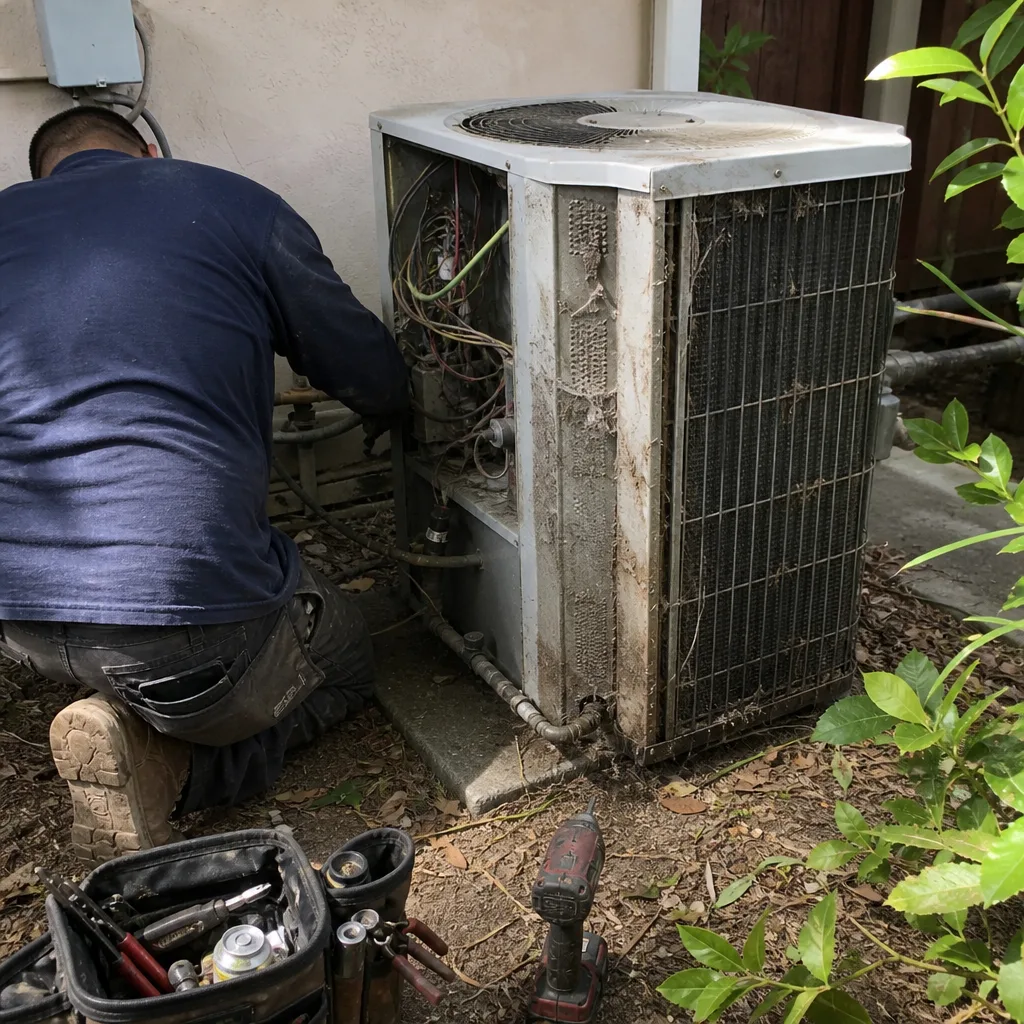 Before
 After
AfterWhen to Call a Professional
Some maintenance findings mean it is time to stop self-assessing and bring in a licensed contractor. If you find standing water in your crawl space after rain, a foundation crack wider than 1/8 inch that is growing, water stains on ceilings, a tile roof with multiple cracked or shifted tiles, or galvanized pipes showing visible corrosion, these are not DIY situations. They require a professional assessment and a repair plan before they get worse.
Sawyer Remodel Pasadena meets the needs of local homeowners through free estimates delivered in writing before any work begins. If you are in the 91103, 91105, or 91107 area and want a professional maintenance walkthrough or a repair assessment for anything on this checklist, call (626) 657-5396. For a broader assessment of any section of your home, our bathroom remodeling and home renovation teams handle everything from single-room updates to whole-home projects.
Frequently Asked Questions

A professional maintenance walkthrough in Pasadena typically runs between $150 and $400, depending on the size of the home and the scope of the inspection. Some contractors offer free maintenance assessments as part of a broader estimate process. The cost is always less than the repair you are trying to prevent. Call (626) 657-5396 to ask about a walkthrough for your home.
You should do a visual self-assessment four times per year, once per season, and schedule a professional walkthrough once per year. The seasonal checks catch visible issues like failed caulking and water stains. The professional walkthrough catches hidden issues like crawl space problems and early roof failures. In Pasadena’s climate, this cadence prevents most major repairs.
Failed caulking and sealants, followed closely by downspout drainage problems. The combination of Pasadena’s intense UV exposure and the Santa Ana winds breaks down exterior sealants faster than in coastal climates, and winter rain exploits every failure. These are also the cheapest problems to fix early, which is why seasonal checks matter.
Yes. Tile roofs fail at the underlayment and flashing, both of which are invisible from the ground. Cracked tiles, deteriorated ridge caps, and failed flashing can be present on a roof that looks perfect from the street. Schedule a professional tile roof inspection every two to three years, or after any significant wind event.
Manage the water around your foundation. Expansive clay soil swells when wet and shrinks when dry, and preventing water from saturating the soil directly against your foundation is the most effective protection. Extend downspouts 4 to 6 feet from the house, maintain consistent irrigation, and check for standing water after every rain.
Do both. Self-assess the visible and simple items four times per year: caulking, paint, drainage, filters, and visible plumbing. Hire a licensed contractor once per year to assess the hidden systems: crawl space, roof, HVAC, and foundation. This split keeps your annual maintenance cost low while catching the issues you cannot see.
The Bottom Line
Pasadena homes fail in predictable patterns driven by the climate and the soil, and a maintenance checklist that ignores those patterns is not worth much. The four seasonal checks in this guide, done consistently, catch the majority of issues before they become expensive repairs. Exterior caulking and paint need attention before Santa Ana season. Foundation drainage needs attention before and during winter rains. HVAC systems need pre-season and post-season service. And tile roofs need professional eyes every two to three years. Do the simple checks yourself, pay for the annual professional walkthrough, and keep the water away from your foundation. Explore more guides & resources for Pasadena homeowners. If you need a maintenance assessment or a repair estimate in Pasadena, call (626) 657-5396 and get the price in writing before any work starts.
Written by Luca Romano, Owner at Sawyer Remodel Pasadena, serving Pasadena since 2005.